What We Deliver
Siege Cyber provides vulnerability scanning services across your external and internal infrastructure. We combine automated scanning tools with manual verification and expert analysis to identify genuine security weaknesses, prioritise remediation based on actual risk, and help you meet compliance obligations without drowning in false positives.
Here is what you get:
- External vulnerability scanning – We scan your internet-facing infrastructure (web servers, mail servers, VPNs, cloud services, APIs) to identify vulnerabilities that external attackers could exploit. This includes checking for missing patches, misconfigurations, weak encryption, exposed services, and known vulnerabilities in your public-facing systems.
- Internal vulnerability scanning – We scan your internal network infrastructure to identify vulnerabilities that could be exploited by an attacker who has gained initial access (via phishing, compromised credentials, or insider threat). This includes servers, workstations, network devices, databases, and internal applications.
- Authenticated scanning – Where appropriate, we conduct authenticated scans using provided credentials to get deeper visibility into system configurations, installed software, and patch levels. This provides more accurate results than unauthenticated scanning and reduces false positives.
- Continuous or scheduled scanning – Depending on your compliance requirements and risk tolerance, we offer monthly, quarterly, or continuous vulnerability scanning to maintain ongoing visibility into your security posture. Essential Eight compliance typically requires weekly scanning for high-risk software. ISO 27001 and SOC 2 typically require quarterly scanning at minimum.
- Manual verification and false positive filtering – Automated scanners generate a lot of noise. We manually verify critical and high-risk findings to confirm they are genuine vulnerabilities, filter out false positives, and provide context about what the vulnerability actually means for your environment.
- Prioritised remediation guidance – Not all vulnerabilities are equal. We provide clear, prioritised remediation guidance based on exploitability, business impact, and compliance requirements. You get a roadmap, not just a list of CVEs.
- Compliance reporting – We deliver reports formatted for ISO 27001, SOC 2, Essential Eight, PCI DSS, or other compliance frameworks. Your auditors get the evidence they need, and your technical team gets the detail required to actually fix issues.
Our Process
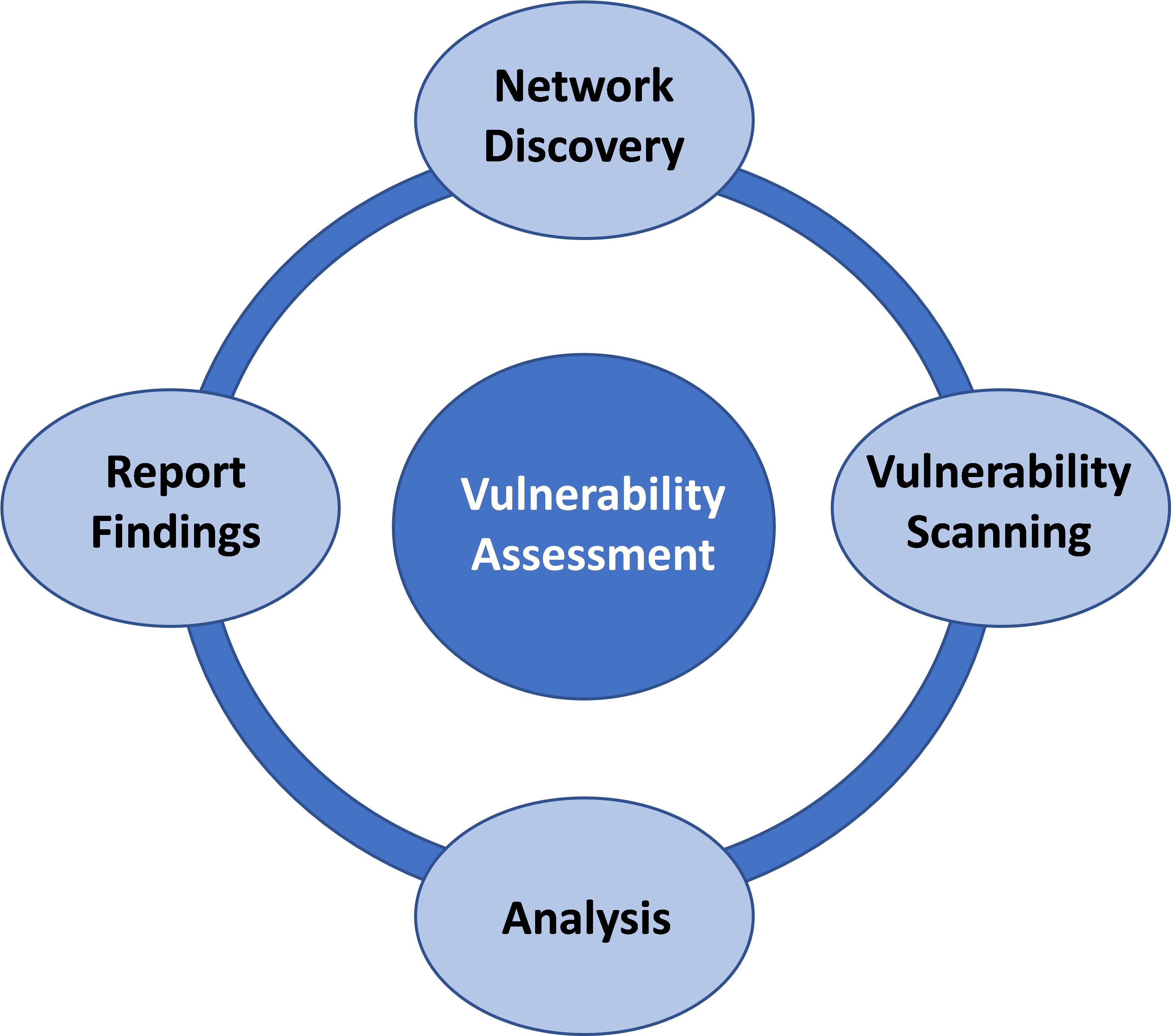
We have conducted vulnerability assessments for hundreds of Australian businesses. Here is how it works.
1. Scoping and Discovery
We meet with your team to define the scope of the vulnerability assessment. What systems and networks should be included? What is in scope and what is out of scope? What credentials will be provided for authenticated scanning? What compliance frameworks are you working towards? We also conduct initial discovery to map your external attack surface and understand your internal network architecture.
2. Initial Vulnerability Scan
We conduct the first comprehensive vulnerability scan across the agreed scope. This typically includes external internet-facing infrastructure, internal network devices, servers, workstations, and cloud environments. We use industry-leading scanning tools combined with our own custom checks to identify missing patches, misconfigurations, weak encryption, exposed services, and known vulnerabilities.
3. Manual Verification and Analysis
Automated scanners flag thousands of potential issues, many of which are false positives or low-risk findings. We manually verify critical and high-risk vulnerabilities to confirm they are genuine and exploitable in your environment. This is where human expertise separates useful intelligence from noise.
4. Prioritised Reporting and Remediation Guidance
We deliver a detailed vulnerability assessment report that includes an executive summary (for non-technical stakeholders), a technical findings section (with evidence and reproduction steps), a risk rating for each vulnerability, and clear remediation guidance. We prioritise findings based on exploitability, business impact, and compliance requirements so you know what to fix first.
5. Remediation Support and Retesting
Once you have remediated the identified vulnerabilities, we conduct targeted rescans to verify the fixes are effective and no new issues were introduced. We also provide ongoing support to answer questions and help your team work through the remediation process.
6. Ongoing Scanning Programme (Monthly/Quarterly/Continuous)
For clients who need continuous compliance or ongoing visibility, we establish a regular scanning programme. This can be monthly, quarterly, weekly (for Essential Eight), or continuous depending on your requirements. You receive regular reports, trend analysis, and alerts for newly discovered critical vulnerabilities that require immediate attention.
Who This Is For
This service is built for Australian SaaS companies, technology businesses, financial services firms, healthcare organisations, and any business that needs to identify security vulnerabilities, meet compliance requirements, or maintain continuous visibility into their security posture.
You are a good fit if:
- You need to meet compliance requirements that mandate regular vulnerability scanning (ISO 27001, SOC 2, PCI DSS, Essential Eight, APRA CPS 234)
- You want to identify security weaknesses before conducting a penetration test so you can remediate obvious issues first and get more value from the pentest
- Your board, investors, or customers are asking for evidence of regular security testing
- You are preparing for a compliance audit and need current vulnerability scanning reports
- You have been breached before and want ongoing visibility into your security posture to prevent it happening again
- You need to demonstrate due diligence in managing cybersecurity risk
- You are a growing business and want to build good security hygiene from the start
If you are using Vanta or Drata for compliance automation, vulnerability scanning is often a required control for ISO 27001 and SOC 2. We can integrate our scanning reports directly into your compliance platform and provide the evidence your auditors need. As official partners of both Vanta and Drata, we understand exactly what documentation and scan frequency these platforms require.
For Essential Eight compliance, vulnerability scanning is explicitly required at all maturity levels. Maturity Level 1 requires weekly scanning of high-risk software. Maturity Level 2 expands this to additional applications. We know the Essential Eight requirements inside out and deliver scanning that satisfies ASD guidelines.
Why Choose Siege Cyber
20+ years of offensive security experience. Our Technical Director, Peter Stewart, has spent over two decades in hands-on cybersecurity roles, including penetration testing, network security engineering, and vulnerability research. We know how attackers think and what vulnerabilities actually matter in the real world.
We understand Australian compliance requirements. Whether you need scanning for Essential Eight, ISO 27001, SOC 2, APRA CPS 234, or PCI DSS, we know what auditors and regulators expect. We deliver reports that satisfy compliance requirements while also providing genuinely useful security insights. Essential Eight compliance is particularly demanding around vulnerability scanning (weekly scans for high-risk software), and we know exactly what ASD expects.
Expert analysis, not just automated scanning. Anyone can run a vulnerability scanner. The value is in the analysis. We manually verify critical findings, filter out false positives, provide context about what vulnerabilities mean for your environment, and prioritise remediation based on actual risk. You get intelligence, not just data.
Clear, actionable reporting for technical and non-technical audiences. Our reports are written for two audiences: technical teams who need detailed remediation guidance, and business leaders who need to understand the risk. You get an executive summary that explains what matters and why, plus technical detail with reproduction steps and specific remediation recommendations.
Official Vanta and Drata partner. If you are using compliance automation platforms, we know how to integrate vulnerability scanning evidence into your compliance programme. We provide the reports and documentation these platforms require, formatted correctly and on schedule.
Frequently Asked Questions
What is the difference between vulnerability assessment and penetration testing?
Vulnerability assessment uses automated scanning tools to identify known vulnerabilities, misconfigurations, and missing patches across your infrastructure. Penetration testing involves manual exploitation of vulnerabilities by experienced security professionals to demonstrate real-world impact. Think of vulnerability assessment as finding the holes, and penetration testing as proving what an attacker could do through those holes. Both are important, and they complement each other. We recommend regular vulnerability scanning (monthly or quarterly) combined with annual penetration testing.
How often should we conduct vulnerability scans?
It depends on your compliance requirements and risk profile. ISO 27001 and SOC 2 typically require quarterly vulnerability scanning at minimum. PCI DSS requires quarterly external scans and annual internal scans. Essential Eight Maturity Level 1 requires weekly scanning of high-risk software. For high-risk environments or internet-facing infrastructure, we recommend monthly or continuous scanning. We can help you determine the right frequency based on your specific circumstances.
Will vulnerability scanning disrupt our operations?
Vulnerability scanning is designed to be non-disruptive. We conduct authenticated scans during scheduled maintenance windows where appropriate, and we throttle scan speeds to avoid overwhelming network or system resources. That said, some older or poorly configured systems may be sensitive to scanning activity. We always coordinate scan timing with your team and can adjust our approach if we identify systems that require special handling.
What happens if you find a critical vulnerability during scanning?
If we identify a critical vulnerability (such as a remotely exploitable flaw in an internet-facing system), we notify you immediately via phone or secure communication channel rather than waiting for the formal report. This allows you to respond quickly and mitigate the risk. We also provide emergency remediation guidance and can assist with patch deployment or workaround implementation if needed.
Do we need vulnerability scanning if we already do penetration testing?
Yes. Penetration testing is typically conducted annually and provides a point-in-time assessment of your security posture. Vulnerability scanning provides continuous or regular monitoring to identify new vulnerabilities as they are discovered, systems as they are deployed, and configurations as they drift. Most compliance frameworks (ISO 27001, SOC 2, Essential Eight, PCI DSS) require both regular vulnerability scanning and periodic penetration testing.
Can you help us remediate the vulnerabilities you find?
Absolutely. We provide detailed remediation guidance in our reports, including specific patch versions, configuration changes, and mitigation strategies. If your team needs additional support, we can also assist with patch deployment planning, configuration hardening, or architectural changes to address systemic issues. Some clients engage our vCISO service for ongoing support with vulnerability management.
How much does vulnerability scanning cost?
The cost depends on the scope (number of IP addresses, systems, and applications), frequency (one-off, quarterly, monthly, continuous), and level of analysis required. External vulnerability scans are typically less expensive than internal scans because the scope is more limited. We provide detailed quotes after the initial scoping consultation, so there are no surprises. Contact us for a quote based on your specific requirements.
Ready to Identify Your Vulnerabilities?
You cannot fix security weaknesses you do not know about. Vulnerability scanning provides the continuous visibility you need to stay ahead of attackers, meet compliance requirements, and demonstrate security maturity to boards, auditors, and customers. The longer you wait, the greater the risk that an attacker finds your vulnerabilities first.
Book a free 30-minute consultation with our team. We will assess your environment, explain what type of vulnerability scanning makes sense for your business, and provide a detailed quote with no obligation. If you need regular vulnerability scanning for Essential Eight, ISO 27001, SOC 2, or just good security hygiene, we can help.