
The Complete Guide to Penetration Testing in Brisbane
If you are a Brisbane business owner or IT manager who has been told you need penetration testing, but you are not entirely sure what that means, what it costs, or what you actually get at the end of it, this guide is for you.
Penetration testing (or “pen testing”) is essentially a controlled, authorised attempt to break into your systems before a real attacker does. A qualified security professional uses the same tools and techniques as a malicious hacker, finds the weaknesses in your environment, and gives you a detailed report on what was found and how to fix it.
It sounds straightforward, but there is a lot of variation in how pen tests are scoped, priced, and delivered. Getting the wrong test, or the wrong provider, can leave you with a false sense of security and a hefty invoice.
Siege Cyber is a CREST-accredited company for penetration testing. The accreditation is assessed at company level and covers the penetration testing we deliver, and it is verifiable on the CREST member register. If you are shortlisting testers in Brisbane, that is the credential worth checking first, and checking the scope of, because CREST accredits penetration testing separately from vulnerability assessment, red teaming and incident response.
What Types of Penetration Testing Are Available?
Penetration testing is not a one-size-fits-all service. The type of test you need depends on what you are trying to protect and why you are doing it.
The most common types include:
-
External network penetration testing – attacks your internet-facing systems from the outside, simulating a remote threat actor
-
Internal network penetration testing – simulates an attacker who is already inside your network (think a compromised workstation or a rogue employee)
-
Web application penetration testing – tests your websites, portals, and customer-facing applications for vulnerabilities like injection flaws, broken authentication, and insecure data exposure
-
API penetration testing – specifically targets the application programming interfaces your systems use to communicate with each other or with third parties
-
Cloud penetration testing – reviews the security of your AWS, Azure, or Google Cloud environment
-
Wireless penetration testing – tests the security of your Wi-Fi infrastructure
Most small to mid-sized businesses in Brisbane start with an external network test or a web application test, depending on what they are most concerned about or what a client or auditor has specifically asked for.
How Much Does Penetration Testing Cost in Australia?
Cost is usually the first question, and the honest answer is: it depends.
Australian businesses can generally expect to pay anywhere from AUD $6,000 for a focused single-application test through to AUD $40,000 or more for a complex engagement covering multiple environments. Here is a rough breakdown of typical price ranges:
| Test Type | Indicative Cost (AUD) |
|---|---|
| Web application (single) | $5,900 – $16,500 |
| External network | $3,400 – $9,500 |
| Internal network | $5,900 – $16,500 |
| API / microservices | $5,900 – $16,500 |
| Cloud infrastructure | $6,600 – $12,500+ |
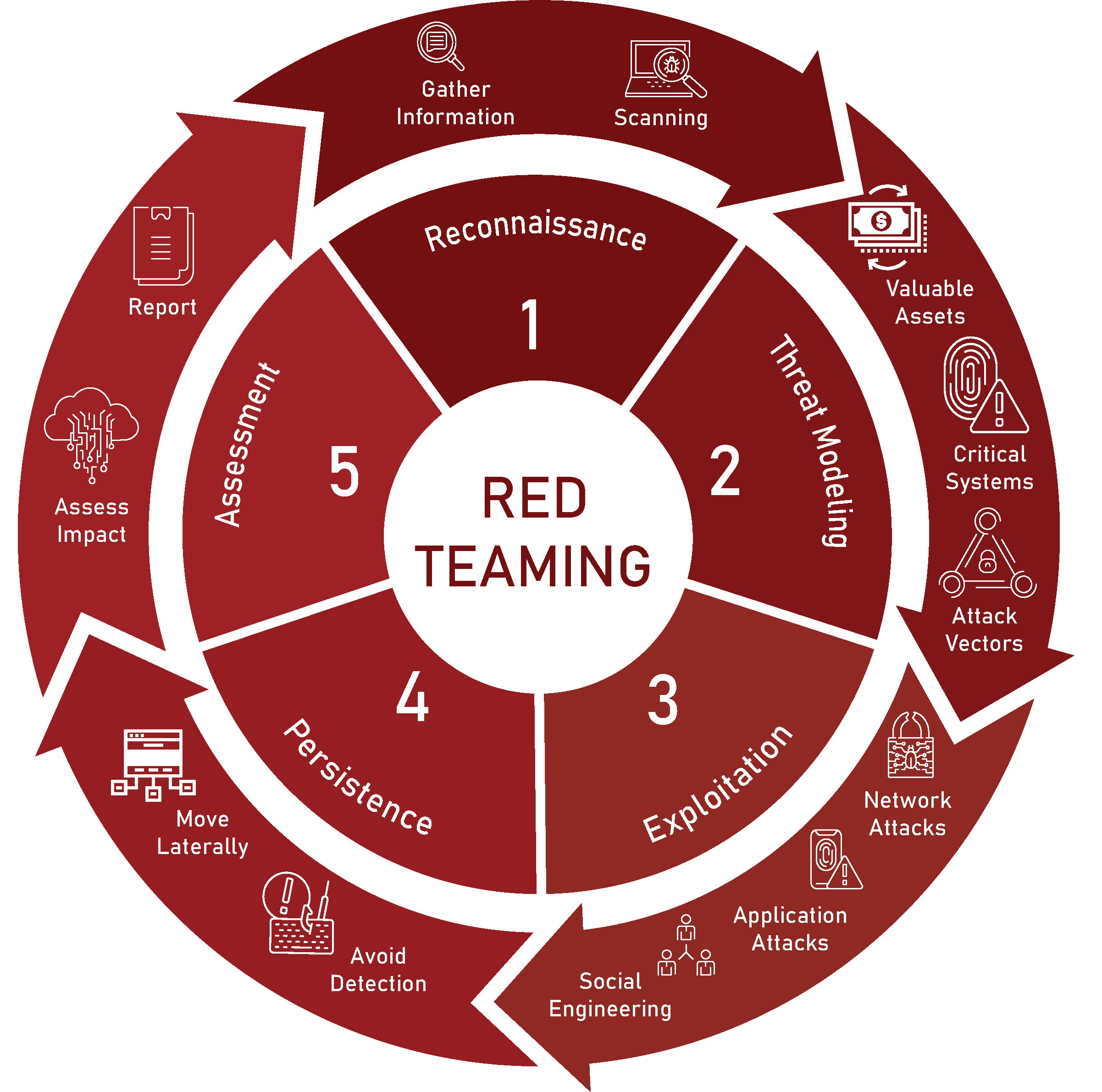
| Red team / adversary simulation | $30,000 – $60,000+ |
Pricing is largely driven by scope, complexity, and the number of days a skilled tester needs to do the job properly. Be cautious of extremely low quotes. A $999 network scan is not a penetration test, it is an automated vulnerability scan with a report attached. Those two things are very different.
Siege Cyber publishes transparent pricing for common scopes. You can see our penetration testing cost in Australia to get a sense of what a properly scoped engagement looks like.
Not sure what type of test you need? Siege Cyber offers a free initial consultation to help you scope the right engagement for your environment and budget. There is no obligation and no sales pressure. Get in touch here.
Penetration Testing for ISO 27001 Compliance
If your organisation is working toward ISO 27001 certification, penetration testing is not a formal requirement under the standard, but it is something auditors increasingly expect to see.
ISO 27001 requires you to assess risk and demonstrate that your security controls actually work in practice. A pen test is one of the clearest ways to do that. It produces evidence you can point to in an audit, maps directly to the risks in your risk register, and shows that your organisation takes control effectiveness seriously, not just control documentation.
Siege Cyber works with Brisbane businesses across their full ISO 27001 journey, from initial gap analysis through to certification. If you are using Vanta or Drata to automate parts of your compliance programme, we can also help you get the most out of those platforms, including making sure your penetration testing evidence is captured and mapped correctly within the tool.
Penetration Testing for SOC 2
SOC 2 is another area where pen testing comes up regularly, particularly for SaaS companies and technology businesses serving Australian or US enterprise clients.
Like ISO 27001, penetration testing is not formally mandated for SOC 2. But it is widely expected, especially for SOC 2 Type II, where auditors are looking for evidence that your controls operated effectively over a monitoring period. A well-scoped pen test, with documented remediation and a retest, gives your auditor exactly what they need to see.
A common mistake businesses make is commissioning a pen test that is too narrow in scope or one that does not align with the systems included in their SOC 2 boundary. The result is a report that does not satisfy the auditor and a test that needs to be redone. Getting the scoping right from the start saves both time and money.
What Does the Process Look Like?
A good penetration test follows a structured methodology. At Siege Cyber, our process typically involves:
-
Scoping – we agree on what systems are in scope, what type of testing is required, and what the rules of engagement are
-
Reconnaissance – gathering information about your environment before active testing begins
-
Vulnerability identification – using a combination of manual techniques and tooling to identify weaknesses
-
Exploitation – actively attempting to exploit identified vulnerabilities to understand their real-world impact
-
Reporting – delivering a clear, plain-English report that includes an executive summary, technical findings, risk ratings, and prioritised remediation recommendations
-
Remediation support – helping your team understand and action the findings
-
Retest – verifying that vulnerabilities have been properly remediated
The retest is something a lot of providers skip or charge extra for as a surprise. Make sure it is included in your quote upfront.
Why Choose a Brisbane-Based Penetration Testing Provider?
Working with a local provider has real practical advantages. You can get on a call or meet face to face to scope the engagement properly. There is no time zone friction when questions come up during testing. And when the report lands, you can walk through the findings with someone who understands the Australian regulatory environment, including the Privacy Act, APRA CPS 234, and the ASD Essential Eight.
That matters when you are explaining findings to a board or a compliance auditor. A 40-page technical report is not much use if no one on your team knows what to do with it.

Does a Small Brisbane Business Really Need a Penetration Test?
This is the question we get most often from businesses with fewer than fifty staff, and it is a fair one. The honest answer is that it depends entirely on what you hold and who you answer to.
You almost certainly need one if any of the following apply:
-
A client or prospect has asked for it. This is now routine in enterprise procurement and government supply chains, and “we are too small” is not an accepted answer.
-
You are pursuing ISO 27001, SOC 2, DISP or Essential Eight. Auditors expect evidence that your controls work, not just that they exist.
-
You handle payment data, health records or personal information at scale. The Privacy Act obligations do not scale down with your headcount.
-
You build or sell software. Your customers inherit your vulnerabilities, which makes your security their risk.
If none of those apply and you are a ten person business running standard cloud services with nothing unusual exposed, a full penetration test may be premature. A vulnerability assessment or an Essential Eight gap analysis is often the more sensible first step, and it costs considerably less. We will tell you that on the call rather than sell you a test you do not need yet.
What is genuinely different about testing a smaller business is scope, not rigour. There is less to test, so the engagement is shorter and cheaper, but the methodology is identical. A small attack surface tested properly is far more useful than a large one scanned superficially.
What Does a Penetration Test Usually Find?
Clients often expect an exotic zero-day. In practice, the findings that lead to real breaches are mundane, and that is the useful part, because mundane problems are fixable. The issues we report most frequently are:
-
Weak or reused credentials, particularly on administrative accounts and service accounts that no one has reviewed in years.
-
Missing multi-factor authenticationon remote access, email or administrative interfaces. Still the single most common route in.
-
Unpatched softwareon internet-facing systems, where a known vulnerability has had a public exploit available for months.
-
Exposed administrative interfacesthat were meant to be internal only, reachable from the open internet.
-
Broken access controlin web applications, where changing a value in a URL or request exposes another customer’s data.
-
Injection flawssuch as SQL injection, which remain common in custom-built or older applications.
-
Excessive user permissionswhere everyday accounts can reach systems and data far beyond what their role requires.
-
Insecure configurationin cloud environments, especially storage left publicly readable.
A good report does not just list these. It ranks them by the actual risk to your business, explains how they chain together, and tells you what to fix first. Two findings that look minor on their own can combine into a full compromise, and a report that does not explain that is not doing its job.
The findings that matter most are almost always on your internet facing systems: an exposed admin interface, a forgotten staging site, an authentication flow that leaks whether an account exists. Those are reachable by anyone, so they are where an attacker starts. Every finding in the report carries remediation guidance written for whoever has to fix it, with the exact change needed rather than a generic reference to a CVE.
How Often Should You Test?
Annually is the usual baseline, and it is what most auditors and insurers expect to see. Test more often if you release software frequently, if your environment changes materially, or if you have just completed a significant migration. A penetration test describes your security at a point in time, so a test from eighteen months ago says very little about the system you are running today.
The other trigger worth naming is remediation. If a test found serious issues, the retest matters as much as the original engagement. Fixing a vulnerability and never verifying the fix is how organisations end up carrying the same finding into the following year’s report.
Ready to Get Started?
Siege Cyber is a Brisbane-based cybersecurity company with over 20 years of hands-on experience in penetration testing, compliance frameworks, and security advisory. Whether you need a standalone web application test, a full-scope engagement to support an ISO 27001 audit, or advice on where to start, we are here to help.
Visit penetration testing services to learn more about our pen testing services, or view our transparent pricing to get a feel for what your engagement might cost.
Siege Cyber has been helping businesses across Australia with penetration testing, compliance, and cyber risk for over 20 years. If you’d like to discuss what type of testing makes sense for your organisation, or if you’re preparing for an ISO 27001 or SOC 2 audit and need testing as part of that process, get in touch.
You can reach us at siegecyber.com.au or email contact@siegecyber.com.au directly. We’re based in Brisbane but work with clients across the country.
Testing elsewhere in Australia? We have guides for Sydney and Melbourne, and a national guide to choosing a penetration testing company in Australia.
Siege Cyber is a CREST accredited company for penetration testing, working with businesses across Australia on fixed-price testing and compliance. Get a Fixed-Price Quote.