SOC 2 for AI SaaS Companies: What Enterprise Buyers Will Ask Before They Buy
For an AI SaaS company, SOC 2 is often no longer a future compliance project. It becomes urgent when a promising enterprise deal reaches procurement and the customer asks for evidence that their data, systems and users will be secure.
The product may be strong. Your team may have done the hard work to build it. But if you cannot answer the buyer’s questions about AI, customer data, access controls and security testing, a deal can slow down or stop altogether.
At Siege Cyber, we help Australian SaaS and technology businesses prepare for SOC 2, strengthen the security controls behind their products and get ready for the scrutiny that comes with enterprise sales.
Why SOC 2 matters for AI SaaS companies
Enterprise customers are cautious about where their data goes, particularly if it is processed by AI models, third-party providers or automated workflows.
They want to understand whether your business has sensible security practices in place. They also want confidence that you can identify risk, respond to incidents and protect their information as your product evolves.
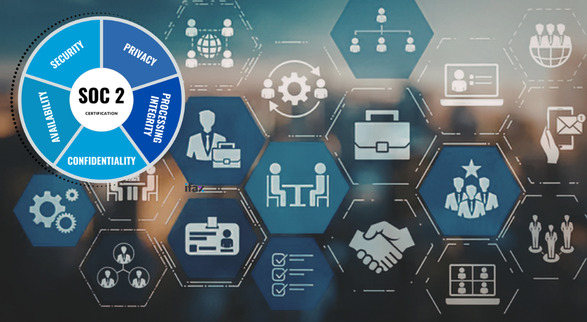
SOC 2 provides an independent report on the controls your organisation has designed and operated. Security is mandatory under the SOC 2 Trust Services Criteria. Depending on your product and customer expectations, you may also need to address availability, confidentiality, processing integrity or privacy.
For many Australian companies selling software into the United States or larger global organisations, a SOC 2 Type 2 report is the evidence procurement teams expect before they are comfortable moving forward.
What enterprise buyers ask about AI security
A customer security questionnaire may not always use the words AI governance. However, the questions often lead there.
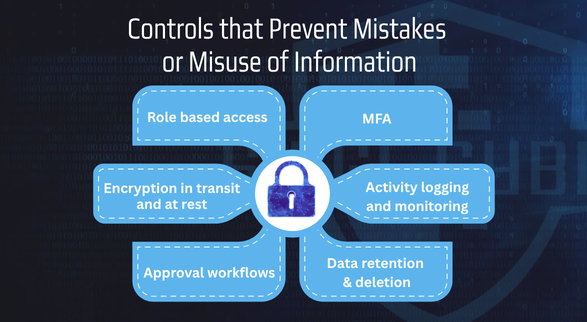
Buyers are trying to work out what happens to their information once it enters your platform, who can access it, which third parties are involved and what controls stop mistakes or misuse.
Where does customer data go?
Customers will want to know whether their information is sent to a third-party large language model, stored by an AI provider, used for model training or retained beyond the purpose of delivering your service.
Your team should be able to clearly explain:
-
Which AI tools, models and providers are used in your service
-
What types of customer data can be sent to those providers
-
Whether data is retained, logged or used for training
-
Which contractual, technical and privacy controls apply
-
How customers can limit or control the use of their data
This is not just a technical discussion. Australian businesses also need to consider their obligations under the Privacy Act 1988, including how personal information is handled and whether data is disclosed overseas.
Who can access the system and data?
Enterprise buyers will assess how access is granted, reviewed and removed. They will usually expect multi-factor authentication, strong password controls, role-based access and a documented process for managing employees, contractors and privileged accounts.
For AI SaaS products, access questions can extend to API keys, model-management consoles, development environments, prompt logs and data stores. If a developer leaves the business, can you show that their access is removed promptly? If someone has administrator access, is that access justified and reviewed?
These are everyday security controls, but they are often where smaller technology businesses get caught out during SOC 2 preparation.
How do you manage third-party AI providers?
Most AI SaaS products rely on third parties. This may include cloud hosting, identity providers, source-code repositories, payment platforms, analytics tools and AI model providers.
Enterprise buyers will expect you to know who those providers are, assess their security posture and document the risk they create for your business and your customers.
A practical vendor-management process does not need to be bureaucratic. It should show that you have identified critical suppliers, reviewed the assurance they provide, understood your data flows and have a process for dealing with changes or incidents.
Can you show that security controls work?
A SOC 2 Type 1 report assesses whether controls are designed and implemented at a point in time. A SOC 2 Type 2 report goes further by assessing whether those controls operated effectively over a defined period.
That is why evidence matters. Written policies alone will not satisfy an auditor or a mature enterprise buyer. You need records that demonstrate the process is being followed, such as access reviews, vulnerability remediation, security training, change approvals, incident exercises and supplier assessments.
SOC 2 controls for AI-enabled products
There is no separate SOC 2 certification for AI. The existing Trust Services Criteria apply to the risks created by your product, people, systems and suppliers.
For an AI SaaS company, the right controls will depend on your product, architecture and the information you handle.
In practice, the following areas deserve early attention:
-
A clear inventory of AI tools, models and third-party providers
-
Documented data flows for customer information
-
Access controls for production systems, cloud platforms, code repositories and AI services
-
Secure management of API keys, secrets and service accounts
-
Security logging and monitoring that supports investigation
-
Change-management controls for application, model and configuration changes
-
Vendor risk management for cloud and AI suppliers
-
Incident-response processes that cover AI-related data exposure or misuse
-
Secure development practices and vulnerability management
-
Regular penetration testing of customer-facing applications and APIs
The aim is not to create a folder of policies that nobody reads. It is to build controls that make sense for the way your company operates, protect customer data and produce evidence that stands up to audit.
Where penetration testing fits
A SOC 2 programme should include more than compliance documentation. If your application has customer-facing logins, APIs, integrations or AI workflows, you need confidence that attackers cannot exploit them.
Penetration testing provides an independent assessment of the technical risks in your environment. For an AI SaaS business, that may include testing authentication, authorisation, API security, data exposure, cloud configuration and vulnerabilities within the web application itself.
It can also help identify issues that may affect AI-enabled features, such as weak access controls, insecure API integrations, excessive permissions or sensitive information exposed through application behaviour.
A good penetration test gives your engineering team practical findings they can act on. It also provides useful assurance for SOC 2 readiness and customer due diligence.
If you are unsure where your organisation stands, a SOC 2 gap analysis is a sensible starting point. It identifies what you already have, what needs attention and the work required before you enter an audit observation period.
SOC 2, Vanta and Drata
Vanta and Drata can make SOC 2 preparation more manageable. They can automate evidence collection, track controls, connect to common technology platforms and give your team a clearer view of what is missing.
However, compliance automation does not make the decisions for you.
A platform cannot determine the right scope for your business, assess whether your AI-provider arrangements create unacceptable risk, write a practical incident-response process or fix a security gap in your application. It also cannot explain your environment to an auditor on your behalf.
Siege Cyber is an official partner of both Vanta and Drata. We help organisations use these platforms properly while providing the hands-on guidance needed to design controls, close gaps and prepare for audit.

A practical path to SOC 2 readiness
If an enterprise prospect is asking for a SOC 2 report now, don’t wait until the final stages of the deal to investigate what is involved.
Start by understanding the customer requirement. Do they need a Type 1 report, a Type 2 report, or evidence that you are actively progressing towards one? The answer can shape your immediate response and your longer-term compliance plan.
Then focus on the basics:
-
Define your SOC 2 scope and select the relevant Trust Services Criteria.
-
Map your systems, suppliers, data flows and AI use cases.
-
Complete a gap analysis against the controls you need.
-
Prioritise security improvements, including penetration testing and remediation.
-
Establish a workable evidence-collection process.
-
Select an appropriately qualified CPA firm for the formal audit.
-
Operate the controls consistently throughout the observation period.
For many SaaS companies, SOC 2 also complements ISO 27001. ISO 27001 is widely recognised in Australia and internationally, while SOC 2 is frequently requested by US enterprise customers. Much of the underlying security work can be aligned to reduce duplication.
Get ready before the next deal stalls
A customer asking for SOC 2 is usually a positive sign. It means you are being considered seriously. The challenge is being able to provide credible assurance before procurement loses momentum.
Siege Cyber helps Australian SaaS and technology companies prepare for SOC 2, test their technical controls and build the evidence needed for enterprise security reviews. Our fixed monthly compliance packages are designed to get businesses audit-ready in 3 to 9 months, without the need to build a full-time internal compliance team. View our SOC 2 and compliance pricing to see what is included.
If you are responding to a customer security questionnaire, planning a SOC 2 audit or need an independent penetration test, contact Siege Cyber at siegecyber.com.au or email contact@siegecyber.com.au. We can help you work out the practical next step.
Siege Cyber’s CERTIFY SOC 2 package covers the readiness work, the evidence and the audit liaison so you reach your report without guesswork. Get a Fixed-Price Quote.