Why Fixed-Price Penetration Testing is Essential
Penetration testing is now an essential part of any serious information security management strategy, including ISO 27001‑aligned ISMSs. The challenge is how to budget for it and demonstrate value to leadership. Fixed price penetration testing solves that by giving you predictable penetration testing costs and consistent, audit ready outputs that fit cleanly into your ISO 27001, SOC 2 and Essential Eight evidence set. Done properly, fixed‑price penetration testing is about discipline and will include a clear scope, an agreed depth of testing, and reporting that maps directly back to your risks and controls.
Penetration testing quotes in Australia can vary significantly, even for work that sounds very similar, ranging from a few thousand dollars to well into five figures. A key reason is the pricing model. Hourly or day‑rate testing shifts most of the risk onto you, so if the scope is vague or the environment is more complex than expected, costs can escalate quickly and the test itself can end up feeling compressed.
Fixed price penetration testing flips that around. You agree on a defined scope up front, such as one internet‑facing web application and its supporting APIs, and a fixed fee to test it to an agreed depth. The tester carries the risk of under estimating effort.
You get:
-
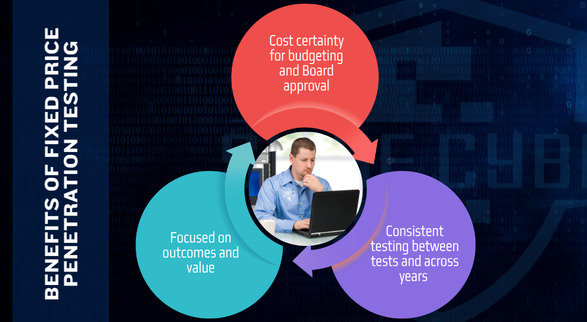
Cost certainty for budgeting and board approvals
-
A consistent level of depth between tests and across years
-
More time focused on outcomes and value
For Australian organisations dealing with ISO 27001, SOC 2, the Privacy Act and, in some sectors, APRA CPS 234, that predictability matters. You can lock a fixed price security testing cadence into your ISMS and risk treatment plans, rather than negotiating from scratch every year.
How fixed-price penetration testing supports ISO 27001
Penetration testing is not named as a mandatory control in ISO 27001, but the underlying guidance in ISO 27002 and most commentary around the standard refer directly to penetration testing as the way to support technical vulnerability management and security testing controls. Many reputable sources acknowledge that auditors usually expect to see penetration testing as normal evidence for several Annex A controls, particularly those linked to managing technical vulnerabilities, testing changes before release and evaluating control effectiveness over time.
The strongest alignment is with:
-
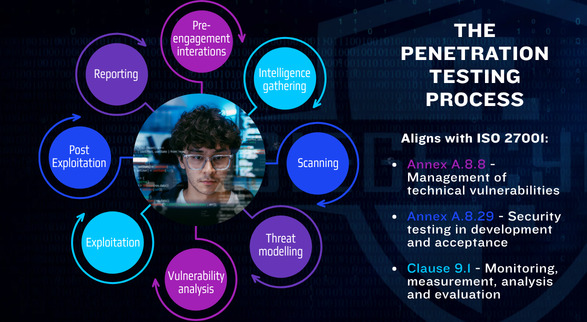
Annex A.8.8 – Management of technical vulnerabilities
-
Annex A.8.29 – Security testing in development and acceptance
-
Clause 9.1 – Monitoring, measurement, analysis and evaluation
A fixed price pen testing arrangement means you can commit, in your vulnerability management procedure, to test key systems on a regular schedule. For example, an annual fixed price web application testing engagement over your customer portal, plus targeted tests before major releases. Each engagement produces consistent evidence: methodology, scope, findings with risk ratings, and proof of retest. That is exactly what auditors in 2026 are asking for.
Because the price is fixed, you are not tempted to quietly push testing out a year when budgets get tight. Instead, you treat it like any other recurring control. From an ISMS perspective, that is a much stronger position than occasional, variable‑cost testing bought only when someone has leftover project funds.
If your team is building its first ISO 27001‑aligned testing cadence and is not sure where to start, Siege Cyber’s penetration testing services are designed to match Annex A and audit expectations.
Fixed price penetration testing and SOC 2, Essential Eight and Australian obligations
The same story repeats across other frameworks. SOC 2 expects you to test controls, not just configure them. The ASD Essential Eight guidance is built on real‑world incident response and penetration testing experience and assumes organisations will verify that controls such as application hardening and multi‑factor authentication withstand attack. APRA CPS 234 and the Privacy Act both require appropriate security measures, and current penetration test reports are routinely used as supporting evidence.
Fixed price penetration testing Australia-wide works well for this because you can align each fixed price pen test to one or more assurance needs. For example:
-
A fixed price penetration testing package over your SaaS platform that feeds ISO 27001, SOC 2 and Privacy Act evidence in one hit
-
A fixed price security testing engagement over your internet‑facing perimeter to support Essential Eight maturity, particularly around user application hardening and patching
Instead of commissioning one‑off tests that each use a different approach, fixed‑price penetration testing lets you standardise methodology and reporting. Over time, that builds a clean trail of comparable reports that show improvement, which regulators and auditors appreciate.
If you are unsure how to translate ISO 27001 Annex A, SOC 2 criteria or the Essential Eight maturity model into a concrete penetration testing schedule, a short advisory engagement can save a lot of trial and error. Siege Cyber can help you design that schedule and then deliver the testing in a way that supports audits, not just tick‑box compliance.
Budgeting and board conversations are easier with fixed price
Security leaders often have to justify penetration testing to a board that sees it as a cost rather than an enabler. Fixed‑price penetration testing makes that conversation more straightforward. Instead of a vague estimate, you present a simple, recurring line item: for example, one fixed price web application testing engagement over your key portal each year, plus a smaller fixed price pen test over APIs after major changes.
Because the cost is stable, you can talk about return on investment in terms of:
-
Reduced likelihood of a breach through exposed controls
-
Stronger evidence for ISO 27001 and SOC 2 audits
-
Less time spent going back and forth with auditors over whether testing is sufficient
It also reduces internal friction. Product and development teams know what testing will happen and when. The finance team knows what it will cost. Everyone is less tempted to cut or delay testing to chase short‑term savings.
If you are at the stage of needing a clear number to take to a board or leadership meeting, Siege Cyber publishes indicative penetration testing prices and can provide a tailored fixed price penetration testing quote for your environment.
What to look for in a fixed price penetration testing partner
Not all fixed price pen testing is created equal. Some offerings are closer to automated scanning with a light human review attached. That may help find simple issues, but it will not satisfy an ISO 27001 or SOC 2 auditor, and it will not tell you much about how an attacker would really move through your environment.
A good fixed price penetration testing Australia based partner should provide:
-
Clear, written scope and rules of engagement that aligns with your business risks and ISMS
-
A structured methodology, including manual testing and exploitation, not just automated tools
-
Findings with business friendly explanations and prioritised remediation advice, plus enough technical detail for your engineers to reproduce and fix the issues.
This is where a provider like Siege Cyber earns its keep. Testing is done by senior consultants who also live in the compliance world. That means your report reads well for both technical staff and auditors, and your fixed price security testing spend genuinely supports certification, not just a once‑off risk exercise.
If your organisation already uses Vanta or Drata to manage ISO 27001 or SOC 2 evidence, penetration testing results can be fed directly into those platforms. Siege Cyber’s partnerships with Vanta and Drata mean we understand how to structure fixed‑price penetration testing reports and remediation evidence so that they are easy to track inside those tools, while still providing the human insight automation cannot.
Siege Cyber is CREST ANZ certified for penetration testing, which means our testing methodologies, reporting, and consultant competency have been independently assessed against a recognised industry standard. CREST ANZ certification gives clients assurance that fixed‑price engagements are delivered by qualified testers using rigorously reviewed techniques, with results you can rely on for ISO 27001, DISP, and other compliance obligations.

Turning fixed price pen testing into a standing control
Fixed‑price penetration testing becomes essential once you treat it as a standing control. You fold it into your ISMS schedule alongside internal audits and management reviews. You give it a defined scope, a fixed price and a clear link to Annex A controls and other frameworks. Over time, you get a sequence of consistent, comparable results instead of a pile of unrelated reports.
If you are ready to move from one‑off tests to a predictable, risk‑aligned approach, Siege Cyber can help you scope and deliver fixed price penetration testing that supports ISO 27001, SOC 2, Essential Eight and real‑world security. To discuss a fixed price pen testing package for your web applications, APIs, cloud or internal environment, visit siegecyber.com.au, review the penetration testing services and pricing, and contact the team at contact@siegecyber.com.au to book a conversation.
Siege Cyber is a CREST accredited company for penetration testing, working with businesses across Australia on fixed-price testing and compliance. Get a Fixed-Price Quote.