
DISP Gap Analysis: How to Prepare Before You Apply
Jumping straight into a DISP application without a clear view of your gaps is a fast track to delays, rework, and frustration. A structured DISP gap analysis gives you an honest picture of where you stand before Defence or a prime contractor does. It is the most effective way to approach DISP readiness and avoid surprises in the application process.
This guide walks through what a DISP gap analysis is, how it works, and why partnering with an experienced consultant often saves time, money, and stress, while still keeping you in control of the outcome.
What Is a DISP Gap Analysis?
A DISP gap analysis is a structured assessment of your organisation against the Defence Industry Security Program membership requirements. It looks at how your current practices line up with the four DISP domains: security governance (how you manage and oversee security), personnel security (how you vet, train, and offboard people), physical security (how sites and assets are protected), and information and cyber security (how data, systems, and networks are secured).
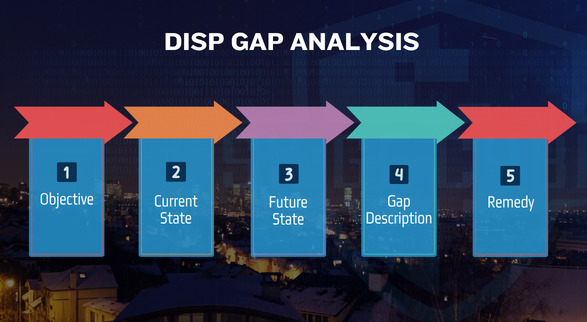
Instead of guessing whether you meet DISP readiness, a gap analysis tests that assumption. It checks your policies, procedures, technical controls, and evidence against what the Defence Industry Security Office expects to see. The result is a clear list of what is already in good shape, where you are partially aligned and where you need to build or tighten controls before you apply.
Why Bother With DISP Preparation Before You Apply?
On paper, the DISP application process looks straightforward. In reality, many businesses underestimate the effort involved and stall halfway through.
A DISP gap analysis up front helps you:
-
Avoid submitting an incomplete or weak application that drifts back and forth with Defence
-
Understand which DISP membership level you can realistically pursue now and which level is a stretch
-
Prioritise work that reduces risk and supports other frameworks such as ISO 27001 and the Essential Eight, rather than creating “DISP-only” busywork
It also sends a positive signal to primes and Defence that you take DISP preparation seriously and have treated this as a security uplift exercise, not just paperwork.
What A Good DISP Readiness Assessment Covers
A useful DISP readiness assessment is not just a checklist. It should walk through each of the four DISP security domains and tie them back to how your business actually operates.
At a minimum, a structured DISP gap analysis should look at:
1. Security governance
-
How security roles and responsibilities are defined
-
Whether there is a workable security governance framework and risk register
-
How DISP requirements intersect with other obligations like the Privacy Act and, where relevant, APRA CPS 234
2. Personnel security
-
Onboarding and offboarding controls
-
Employment screening, NDAs and acceptable use
-
How security responsibilities are communicated and reinforced
3. Physical security
-
Site access controls, visitor management, secure storage, and clear‑desk practices
-
How you protect assets that may hold Defence information, including home‑based or remote work arrangements
4. Information and cyber security
-
Your current cyber security posture against ASD Essential Eight maturity
-
Technical controls such as access management, logging, encryption, and incident response
-
How you manage third parties that may handle Defence‑related information
A consultant who understands DISP will translate the membership requirements into practical questions that make sense for your environment, rather than treating you like a Defence prime with a full security team.

Doing It Yourself vs Working With A Consultant
Many organisations start by reading the DISP application material themselves, which is a sensible first step. The challenge is that DISP requirements often assume a certain level of security maturity and documentation that smaller businesses are still building, so it can be hard to know whether what you have in place will satisfy Defence and prime contractors.
A consultant-led DISP gap analysis adds value in a few ways:
-
Interpreting DISP membership requirements in the context of your size, risk profile, and supply chain role
-
Identifying quick wins versus structural gaps, so you do not over‑engineer low‑risk areas
-
Reusing existing frameworks (such as ISO 27001 policies or Essential Eight uplift work) instead of writing everything from scratch
If you are not sure where your organisation stands, a structured DISP readiness assessment is a sensible first step. Siege Cyber offers DISP gap analyses as a standalone engagement so you get clarity before committing to a full implementation.
What To Expect From A DISP Gap Analysis With Siege Cyber
A practical DISP gap analysis should leave you with more than a checklist. At Siege Cyber, a typical engagement includes:
1. Scope and membership level confirmation
We work with you to confirm which DISP membership level makes sense now and what the long‑term pathway might look like. This avoids designing controls that are heavier than you need.
2. Evidence‑based assessment
We review your existing policies, procedures, technical configurations, and security records against DISP requirements. That includes governance documents, HR processes, physical security measures, and cyber controls such as logging, access management and incident response.
3. Clear, prioritised findings
You receive a structured report showing:
-
Where you are aligned with DISP
-
Where you are partially aligned
-
Where there are gaps, ranked by risk and effort
The focus is on giving you an actionable plan, not a theoretical list of problems.
4. DISP preparation plan
Finally, we translate the findings into a practical DISP preparation plan for Australia, including estimated effort, dependencies, and sequence of work. This plan can be executed internally, with your existing IT partners, or with additional support from Siege Cyber.
How A Gap Analysis Reduces Pain During The DISP Application Process
DISP is not just a paperwork exercise. Defence and primes want to see that the controls you describe are actually implemented and repeatable. A gap analysis helps you line up three things before you lodge your DISP application:
-
Your stated policies
-
Your actual technical and procedural controls
-
Your evidence (records, screenshots, logs, and reports)
This reduces the chance that Defence or a prime comes back asking for clarification or further evidence at a time when deadlines are tight.
If you are already investing in ISO 27001, SOC 2 or Essential Eight uplift, a DISP gap analysis also helps you align those frameworks so you are not duplicating effort across multiple audits and assessments.

Next Steps: devising A Clear DISP Plan
If you are thinking about DISP membership, the best time to do a gap analysis is before you start writing your application. It gives you a clear picture of effort, cost, and timing, and helps you avoid surprises late in the process.
Siege Cyber works with Australian organisations of all sizes to prepare for DISP. We combine DISP readiness assessments with broader security and compliance experience across ISO 27001, SOC 2 and the Essential Eight, so the work you do for DISP also strengthens your overall security posture.
To talk through where your organisation is up to and whether a DISP gap analysis makes sense, visit siegecyber.com.au or contact us at contact@siegecyber.com.au. You can also see indicative pricing and engagement options at ISO 27001 and SOC 2 certification cost.
Siege Cyber runs Essential Eight gap analysis and maturity uplift for Australian organisations, so you can see where each of the eight strategies actually sits. Get a Fixed-Price Quote.
New to DISP? Start with our complete guide to DISP levels and requirements, which covers Entry Level, Level 1 and Level 2, what Defence expects at each, and how the DISP CERTIFY package gets you there.